Most diving destinations give you twelve months a year to choose from, then divide that into peak, shoulder, and off. Tubbataha gives you ten weeks. That's it. From mid-March to mid-June the Sulu Sea calms down enough for liveaboards to make the 10-hour crossing from Puerto Princesa, the reef opens to visitors, and the operators run back-to-back charters for the entire window. The rest of the year, the park is closed and the boats reposition to other Philippines itineraries or relocate entirely.
If you've been told that Tubbataha Reef is on every serious diver's bucket list, that's not marketing copy. It's a UNESCO World Heritage Site (declared 1993), the Philippines' first marine park, and one of the few places left in Southeast Asia where the reef structure has stayed largely intact despite the pressures everywhere else in the Coral Triangle. The shark counts are real. The fish biomass is real. The walls drop to 2,000 metres. The catch, the thing that filters out the casual visitors, is the narrow booking window and the open-ocean transit. This guide is for anyone who's heard the name and is trying to figure out whether it deserves a slot in their next three years of trip planning.
Why Tubbataha is the trip it is
The short version: Tubbataha is an oceanic atoll system sitting alone in the middle of the Sulu Sea, 150 kilometres southeast of Puerto Princesa on Palawan. There are no inhabited islands within hours of the reef. The nearest land is a single ranger station perched on stilts on the South Atoll, where six Philippine Coast Guard and park staff live in rotating shifts for the duration of each diving season. The reef is closed to fishing, dynamite, cyanide, and anchor damage. It has been actively protected and patrolled since 1988.
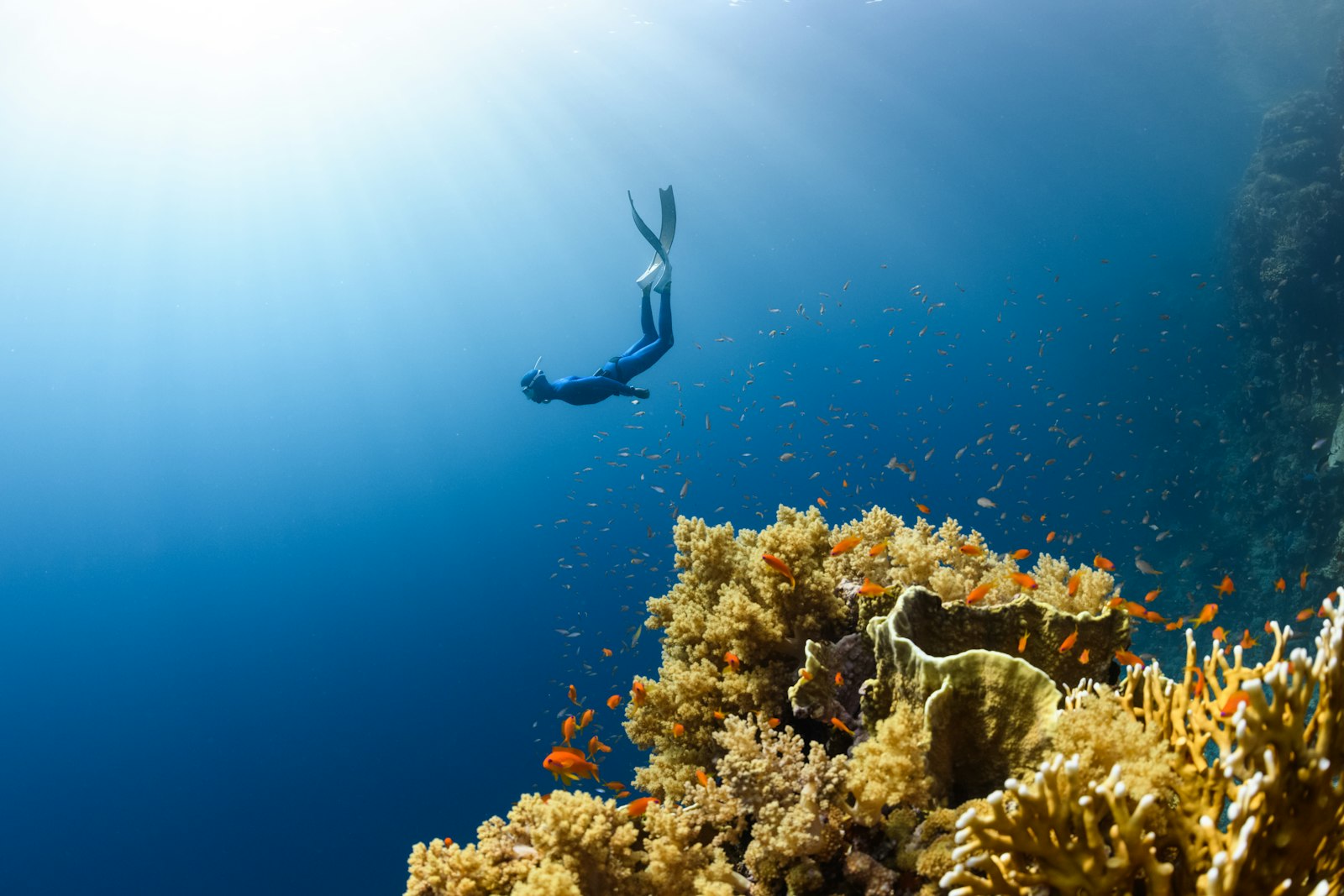
The atolls themselves are two separated reef systems: North Atoll (the smaller, more compact one) and South Atoll (larger, with the ranger station and Jessie Beazley Reef nearby). The walls on both atolls drop vertically from a 5-metre reef crest to deep blue water within a fin kick. The current sweeps along the walls and corners. The pelagics ride the current. The reef fish defend their patches. The whole system runs on the kind of food-web density that you only see when nobody's been removing the apex predators for forty years.
Stack that geography next to the booking window: from late October to mid-March the Northeast Monsoon makes the Sulu Sea crossing impossible. By mid-June the Southwest Monsoon sets in and the seas close back up. That leaves ten to twelve operating weeks, total, with maybe two thousand divers across the entire season. The supply constraint is real, and it's why a Tubbataha cabin in April books out six to nine months in advance.
The season, week by week
Operators typically run charters from the second week of March through the second week of June. The diving conditions are not identical across that window. Three rough sub-windows, with what changes:
Mid-March to mid-April: the opening
The first charters of the year. Water is at its coolest (26 to 27 °C, occasionally a degree cooler in the channels). Visibility is at its best, often 30 to 40 metres on a settled day. The pelagic schools are typically not yet at peak density but the reef diving is at full strength. Prices are slightly softer than peak because some divers wait to see whether the first weeks of the season have any opening-week wrinkles. Worth knowing: the very first charter of the year sometimes runs at a discount because the operator wants to shake down the boat after the off-season refit.
Mid-April to mid-May: peak season
This is the window everyone competes for. Water warms to 28 to 29 °C. The schooling fish (barracuda, jackfish, big-eye trevally) are at their densest. Shark sightings are at their most reliable, with grey reef, whitetip, blacktip, and the occasional thresher or hammerhead pass. Visibility softens slightly (still 25 to 35 metres) as the plankton blooms ride in with the warming water. The trip pricing is at its peak too. Cabins on the better boats sell out 12 months ahead for these weeks.
Mid-May to mid-June: the closing
Water at its warmest, surface conditions starting to get a little more variable as the Southwest Monsoon influence builds. The last charters of the season can have one or two weather-affected days where the boat shelters inside an atoll lagoon rather than running the outer walls. Pelagic density is still strong. Pricing softens again, particularly for the very last departure of the year, because operators are pushing to fill the trip before they reposition the boat.
The single best week, if you had to pick one
The last week of April. Settled water, peak pelagic density, visibility still in the high band, and just past the Easter holiday surge so the operator isn't running at full capacity with every cabin. If you're booking 12 months out and you want one date, that's the date.
The dive sites that earn the trip
Tubbataha doesn't have a lot of named dive sites compared to a destination like the Maldives or Indonesia. The two atolls together have maybe 15 sites that operators rotate through. The repetition is part of the trip; you'll dive several sites multiple times across the week, in different tides, and the dive is meaningfully different each time.
Shark Airport, North Atoll
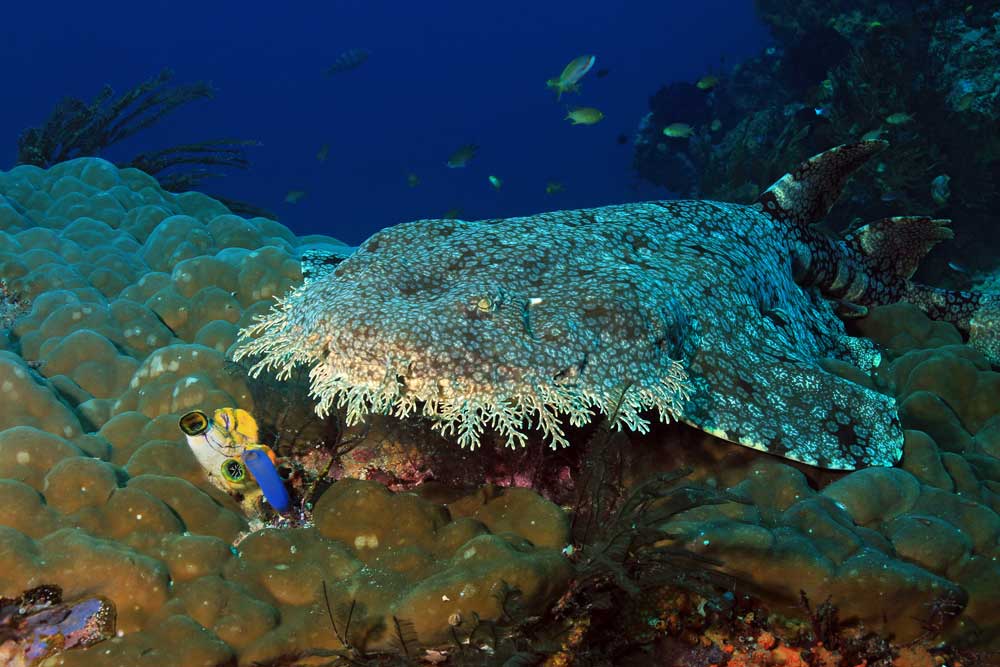
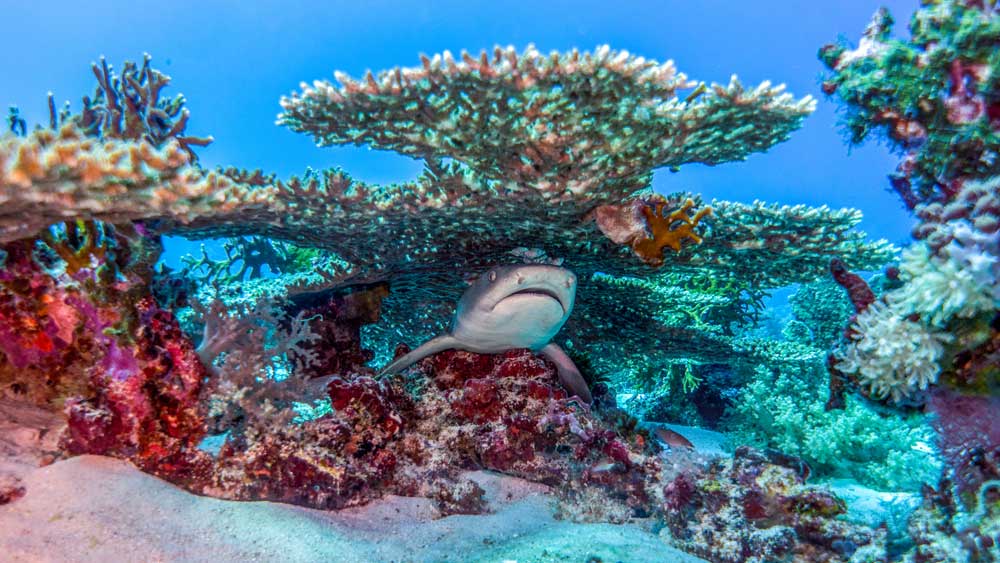
The name does what it says. A long reef slope with a sandy bottom at 25 metres, where the whitetip reef sharks aggregate to rest in shifts of 15 to 40 individuals. The sharks come and go on the current. The behaviour is unusual: they sit on the sand stacked in loose groups, sometimes overlapping, mostly ignoring divers as long as you maintain neutral buoyancy and don't crowd them. A non-aggressive site for shark photography that delivers better images than most "shark dives" elsewhere because the animals are so settled.
Washing Machine, South Atoll
The corner of the South Atoll where the currents converge from both sides of the reef. As the name suggests, the current can be turbulent. The dive plan is a controlled drift along the wall, hooked-in or finning, watching for the pelagic stream that uses the corner as a highway. Schooling barracuda, large bigeye trevally schools, and the occasional manta or whale shark. Not a beginner dive. Not even an intermediate dive in some conditions. Brief carefully and listen to the dive guide.
Black Rock and Amos Rock, South Atoll
The middle and southern points of the South Atoll wall. Some of the best wall diving anywhere in the Philippines: the reef drops vertically from 5 metres to depths beyond recreational range, with current sweeping along the wall and pelagic fly-bys at the edge of visibility. The reef itself is healthy and densely populated, and the macro life on the wall (nudibranchs, pygmy seahorses if you know where to look) is worth a slow second look.

Jessie Beazley Reef
A small, isolated reef 19 kilometres north of the North Atoll. Operators include it in most itineraries as a "between the atolls" stop. The diving is current-driven on a single small atoll system, often producing pelagic encounters that the bigger atolls don't deliver because the geography concentrates the fish into a smaller area. A small site that produces big-fish moments. Visibility tends to be slightly lower than at the main atolls because of plankton accumulation.
Delsan Wreck and the ranger station, South Atoll
The South Atoll has the ranger station on stilts, a piece of social-anchor architecture that crews and divers refer to throughout the trip. Nearby is the wreck of the M/V Delsan, a Filipino freighter that grounded on the reef in the 1980s and sits in 8 to 20 metres of water. The wreck dive is more of a curiosity than a deep wreck dive, but it adds variety to the rotation and the shallow depth makes it a good final dive of the day.
What the diving actually feels like
Three observations from divers who do Tubbataha for the first time, in case the trip-report language hasn't captured the practical reality.
The currents are real
Tubbataha is a current-driven destination. Not in every dive, and not always in the same direction, but enough that the dive plan revolves around tide tables and the dive briefing always covers current expectations. If your last current diving was a relaxed drift over a Caribbean reef, calibrate up. Tubbataha currents can run a knot or more, and the right technique is to swim out into the blue at the start of the dive, drift back along the wall, and ascend in mid-water with an SMB deployed. Reef hooks earn their place. Surface marker buoys are mandatory.
The pelagic density is the experience
Most diving destinations are sold on a specific species: the manta dive, the hammerhead dive, the whale shark snorkel. Tubbataha is sold on density. The dive isn't built around one animal; it's built around the sheer volume of life on the reef. You'll have moments where a school of bigeye trevally fills your entire field of vision, and you'll have moments where a single grey reef shark idles past at five metres' distance. The dive memory is closer to "the whole reef was firing" than "I saw a manta." If you're chasing a specific species, Tubbataha is the wrong trip. If you're chasing the experience of being in a high-density reef ecosystem, it's almost incomparable.
The dive deck is busy
Tubbataha itineraries pack 21 to 25 dives into six diving days. Three or four dives a day, with a night dive on some itineraries. The pace is intense. Many divers report mid-week fatigue, particularly on day four or five, that they don't get on a slower seven-day itinerary elsewhere. Nitrox is essentially mandatory; we've written a longer explainer on nitrox economics if you want the math on why.
The Sulu Sea crossing
The 150-kilometre crossing from Puerto Princesa to the Tubbataha atolls takes 10 to 12 hours depending on the boat's cruising speed and the weather. Most operators leave Puerto Princesa in the early afternoon and arrive at the South Atoll for an evening anchor or a first dive the following morning. The return crossing happens overnight at the end of the trip.
Sea state during the season ranges from glassy calm to moderately uncomfortable. The April and early May crossings tend to be the calmest. The first week of the season and the last week of the season are statistically more variable, with the possibility of 2 to 3 metre swells. Boats are seaworthy enough that the crossing is safe, but seasickness is real and worth planning for. Bring scopolamine patches or cinnarizine and take them before the boat leaves dock.
One quiet detail: the crossing is when most divers do the bulk of their socialising. The dive briefings, the welcome dinner, the first night on the boat, the kit setup, all happen during the transit. By the time you're on the reef, the social rhythm of the boat is established and you're focused on the diving.
Logistics, permits and park fees
Getting to Puerto Princesa
Puerto Princesa has one international airport, Puerto Princesa International (PPS), with mostly domestic connections through Manila and Cebu. International flights into PPS are rare; most international divers fly into Manila or Cebu, overnight, and take a 75-minute domestic flight to Puerto Princesa the following morning. The major Philippine carriers (Philippine Airlines, Cebu Pacific, Air Asia) all serve the route.
Build in a buffer day or two on the Manila or Cebu side. The domestic flight schedules to Puerto Princesa shift seasonally and weather delays during the diving season aren't uncommon. The boats don't wait, and the next departure is a week later.
Park fees
The Tubbataha Reefs Natural Park charges a conservation fee that varies by season and visitor category. As of 2026, the fee runs approximately $100 per diver per trip and is typically collected by the operator and remitted to the park authority. This funds the ranger station, the patrol boats, and the ongoing conservation work. It is not optional. It's also the cheapest single line item on the trip and it's the reason the reef is still there.
Visas and entry
Most nationalities receive 30-day visa-free entry to the Philippines on arrival. Bring a passport with at least 6 months' validity from your trip end date and proof of onward travel. Pre-trip immigration paperwork beyond that is minimal.
What to pack for Tubbataha specifically
Most of the standard tropical liveaboard packing list applies, with three Tubbataha-specific notes:
- Thicker exposure protection than you'd expect. 5 mm wetsuit is comfortable for most divers. The water sits in the upper 20s but the dive schedule is intense and you'll get cold by dive four if you under-suit.
- A reef hook and a long SMB (1.5 m+). Both are non-negotiable for the current diving. Practise SMB deployment from 5 metres at home before you fly.
- A high-capacity dive light and a backup. Some itineraries include night dives at the ranger station or at the South Atoll. Even on day dives, a torch helps illuminate the crevices on the wall where macro life hides.
Cost
Cabin pricing for a 6-night Tubbataha charter typically runs $2,800 to $5,500 per person depending on the operator and cabin grade. The variation is driven mostly by cabin quality: lower-deck twin cabins on mid-range boats sit at the lower end; upper-deck premium cabins on luxury boats sit at the higher end. The diving itself is the same regardless of which cabin you book; the operator runs the same dive plan for everyone on the boat.
Add park fees (~$100), gratuities ($150 to $250 for the week), domestic flight from Manila (~$80 to $200 round trip), pre- and post-trip nights in Puerto Princesa (~$50 to $150 per night), and international flights from your home country. All-in for a Tubbataha trip from a European or US starting point runs $4,500 to $8,000 per diver.
For a fuller breakdown of liveaboard pricing across destinations, see our real-world budget guide.
Who Tubbataha is right for
Right for
- Experienced divers (Advanced certification + 50 to 100 logged dives + comfortable in current).
- Anyone who wants high-density Coral Triangle reef diving without the crowd density of more popular Indonesian sites.
- Divers chasing a UNESCO-grade conservation experience where the protection is real and the diving reflects it.
- Photographers who want pelagic-and-reef variety in a single week.
- Repeat Philippines visitors who've done the resort scene (Anilao, Malapascua, Cebu) and want the bucket-list step up.
Not right for
- Open Water-only divers with limited current experience. The crossing and the dive plans assume comfort with drift diving and SMB deployment.
- Divers chasing a specific signature species. Tubbataha isn't sold on guarantees; it's sold on density.
- Travellers who can't book 6 to 12 months ahead. The season is genuinely tight.
- Anyone with a history of severe seasickness who can't manage the 10 to 12 hour Sulu Sea crossing even with medication.
How to actually book
Booking horizon
For peak weeks (mid-April to mid-May), book 9 to 12 months in advance. The marquee operators sell out within weeks of the calendar opening. For shoulder weeks (mid-March to mid-April and the back half of May), 4 to 6 months is workable. Last-minute Tubbataha bookings are unusual but not impossible; operators sometimes have a single cabin opened by a cancellation, and those cabins are often discounted significantly.
Operator selection
The Tubbataha operator pool is small and stable. The same dozen-ish boats run the reef year after year. Look at three things when comparing: the captain and cruise director's experience (10+ Tubbataha seasons is the right benchmark), the boat's safety record (every operator we'd recommend has clean records; ask anyway), and the cabin layout (lower-deck twin cabins are typically smaller and noisier from the engine room than upper-deck cabins).
Use our trip search with the dates and "Philippines" destination filter to see current availability. Filter for the date range you want and look at the multi-night itineraries; Tubbataha is exclusively a multi-night liveaboard destination.
What to ask the operator
- How many Tubbataha seasons has the cruise director run? More than ten is the right answer.
- What is the boat's group size per dive guide? 4 to 6 divers per guide is the standard for current diving.
- Is nitrox included in the cabin rate, and what's the typical analysed mix?
- What is the contingency plan if a particular dive site is unsafe due to current or visibility on the day?
- Are the park fees and gratuities included in the quoted price, or extra?
Combining Tubbataha with other Philippines diving
Many divers combine Tubbataha with a few days of resort diving elsewhere in the Philippines, either before or after the liveaboard. The geography makes this easy and the calendar overlap is forgiving.
Anilao (macro)
A 2 to 3 hour drive south of Manila, on the Calatagan peninsula. World-class muck and macro diving. The best add-on for photographers; the contrast between Anilao's macro and Tubbataha's pelagic is striking and the two sites complement each other in a single trip log.
Malapascua (thresher sharks)
A small island off the northern tip of Cebu. Daily dawn dives at Monad Shoal for pelagic thresher sharks, year-round but most reliable from March through May (matching the Tubbataha window almost exactly). The Malapascua resorts run day trips out of the island village.
Cebu and Bohol (general reef)
Easy-going resort diving, sardine baitballs at Moalboal, healthy reefs at Apo Island. The right pre- or post-trip add-on for divers travelling with a less-experienced partner or who want a softer week to bracket the intensity of Tubbataha.
Frequently asked questions
How many dives will I do?
21 to 25 dives across a 6-night charter. Some operators add an extra dive on departure day if the schedule allows. Three to four dives a day during the diving portion, including one or two night dives over the week.
What's the typical dive depth?
Most dives are 20 to 30 metres. The walls drop deeper than recreational range, so depth control is important. Computer-managed nitrox is essentially the universal standard.
Do I need shark-diving experience?
Not specifically. The Tubbataha sharks are typically curious but non-aggressive. The diving briefing covers behaviour expectations (don't chase, maintain neutral buoyancy, no flash photography close to the sharks). If you've done any drift diving with a divemaster who can read currents, you have the relevant skills.
Is the food good?
On the established Philippines liveaboards, the food is excellent. Three meals plus substantial between-dive snacks. Most operators accommodate dietary requirements with advance notice.
What's the connectivity like?
Limited. Tubbataha is in the middle of the Sulu Sea, far from cell towers. The ranger station has satellite internet for emergencies. Most boats offer basic Starlink WiFi these days but it's slow and intermittent. Plan to be offline for the diving portion of the trip.
Are there age restrictions?
Operators typically require divers to be 15 or older. Some require 18. The diving requirements (current, depth, advanced certification) effectively limit the trip to adult divers.
What about non-divers?
Tubbataha is a poor fit for non-divers. The boat is at sea for the entire trip with no shore excursions. There's no swimming or snorkelling at the ranger station (it's a working facility). A non-diving partner will spend the week reading on the upper deck. Pair Tubbataha with a resort week in Cebu or Palawan if you're travelling with a non-diver.
What if I get sick on the crossing?
The boat doesn't turn around. Operators have medication on board for moderate seasickness. If you're severely incapacitated, you wait it out in your cabin until the boat anchors at the atoll. Pre-medication is much better than reactive medication.
Can I extend the trip?
Some operators run back-to-back charters where you can book two consecutive weeks on the same boat. Worth asking about; it's the only way to get two weeks of Tubbataha diving in a single season. The boat does a brief turnaround in Puerto Princesa between charters.
The recommendation
Tubbataha is a destination that rewards planning and punishes casualness. Book early, choose your week deliberately, pick an operator with real Tubbataha experience, and turn up with the right kit and the right certifications. The reward is six diving days on one of the last truly intact reef systems in Southeast Asia, with shark counts and fish biomass that you'll struggle to find anywhere else within the recreational diving range.
If we had to put a single sentence on it: this is the trip serious Philippines divers do once and then look back on years later as one of the most concentrated weeks of diving they've ever had. Worth the booking horizon. Worth the crossing. Worth the price.
Browse current Tubbataha liveaboard departures when you're ready to plan, or use our trip search to filter the broader Philippines calendar. If you want a recommendation on the operator that best matches a specific week or experience level, get in touch. The Tubbataha operator pool is small enough that we can speak to it specifically.