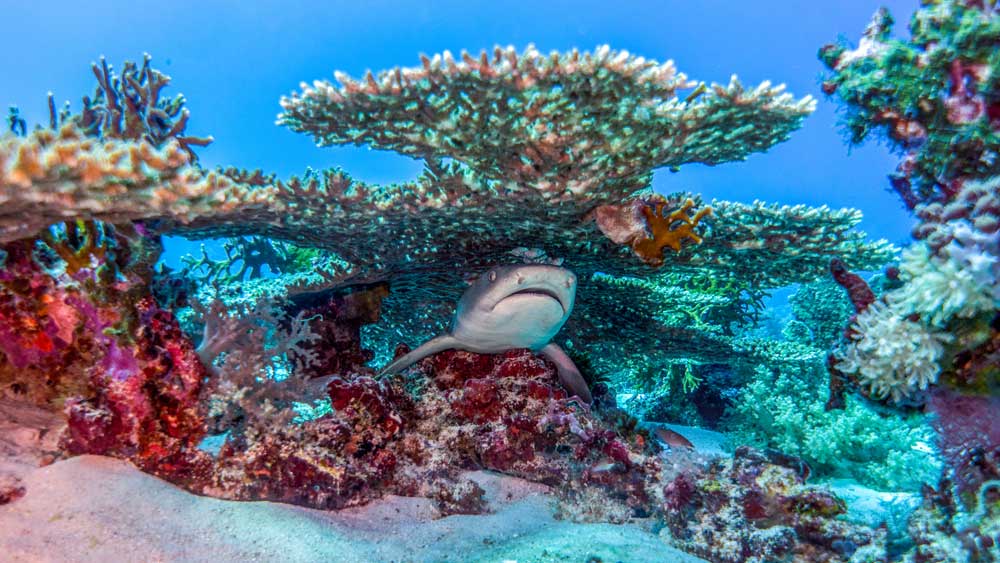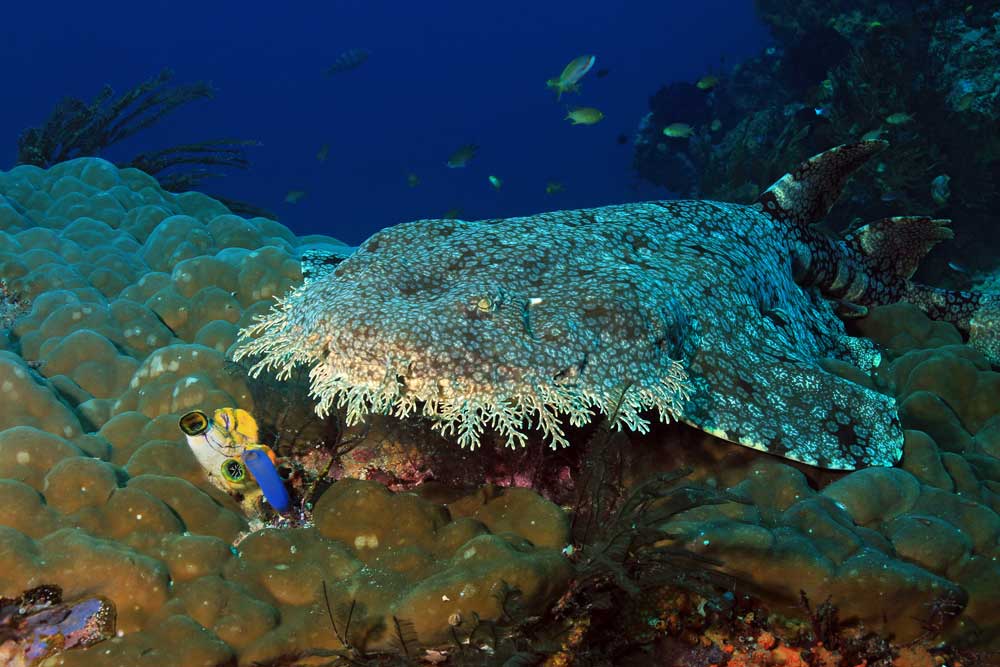
Galapagos and Cocos sit at the top of most experienced divers' "someday" lists. Both are remote volcanic islands in productive Pacific upwellings. Both are only reachable by liveaboard. Both are famous for the same headline species: schooling scalloped hammerheads, silky sharks, Galapagos sharks, the occasional whale shark, the occasional tiger. The brochures make them sound interchangeable. They are not.
If you have one of these trips in your future and you're trying to decide which one to book first, this is the comparison we'd hand a friend. It's the conversation we have several times a month with divers who've narrowed their next big trip down to these two and want to make the right call. The honest answer is that the right pick depends on your tolerance for open-ocean transit, how much variety you want in your week, and whether you're going to do one trip or both.
The short answer
Pick Cocos if you want pure shark diving and you're willing to put up with a 32 to 36 hour open-ocean crossing, real surge, and limited topside variety in exchange for some of the densest hammerhead action on the planet. Cocos is a single-species pilgrimage. The dives are similar from one to the next; the magic comes from the sheer volume of pelagic encounters.
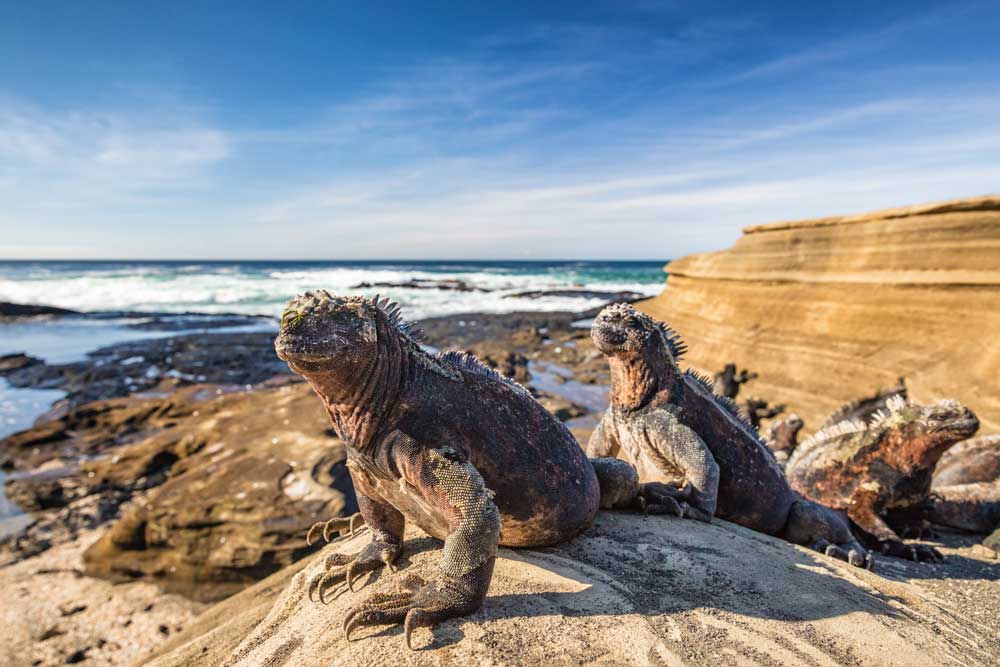
Pick Galapagos if you want shark diving plus everything else the archipelago throws at you: sea lions that body-check your dome port, mola mola in cool water, marine iguanas grazing on the shallow reef, Galapagos penguins underwater, the chance of whale sharks at Darwin and Wolf in season, plus a couple of land days that are genuinely worth taking. Galapagos is a portfolio destination. The dives are different from one another; the magic comes from breadth.
The longer answer is below, because the right pick also depends on how you handle the crossing, how much shore variety you want, and whether you can take three weeks off work or one.
Getting there
Galapagos: a long but civilised travel day
Galapagos liveaboards depart from Baltra (the airport island) or San Cristóbal. You fly into Quito or Guayaquil from your home country, overnight in a hotel, then take a two-hour internal flight to the islands the next morning. Most operators include the transfer from the airport to the dock and an arrival assistant who walks you through the park-fee check-in. The boat itself is sitting in a calm anchorage when you board. By dinner on day one you've usually done a shakedown dive at Bartolomé or North Seymour.
The friction in Galapagos travel is at the front end: the park fees, the transit control card, the strict luggage limits on the internal flight (typically 23 kg per person plus 8 kg of carry-on, enforced strictly). Once you're on the boat, the travel is over.
Cocos: the crossing is the gate
Cocos liveaboards depart from Puntarenas, on Costa Rica's Pacific coast. You fly into San José, transfer two hours by road to the dock, board mid-afternoon, and then steam straight out into the open Pacific for 32 to 36 hours. The crossing can be flat. It can also be rough enough that the bar stays closed for the first night and meal service goes plate-by-plate to the cabins. There is no diving during the transit. You will lose two full days of your trip to the crossing, one out and one back.
This single fact governs everything else about Cocos. Itineraries are typically 10 to 12 nights to make the crossing worth the time. Anything shorter doesn't give you enough diving days to amortise the transit. Anything much longer pushes the trip cost into uncomfortable territory. The 10-night Cocos trip is the sweet spot for most divers.
Practical travel tips
For both destinations, build in a buffer day at the start. Lost luggage, missed connections and weather delays are common enough that "fly in same day as the boat departs" is a bet you'll lose eventually. We've seen divers miss the Cocos crossing because of a four-hour delay out of Houston; the boat doesn't wait, and the next departure is a week later.
For Galapagos specifically, arrive in mainland Ecuador a day or two early if you can. Quito sits at 2,850 metres; if you're flying in from sea level, even one acclimatisation night helps with how your body handles the next day's altitude-to-sea-level flight. Guayaquil is at sea level and is the easier transit hub, but the food and the colonial old town in Quito are arguably worth the slight altitude penalty.
The diving
Both destinations dive deep, hard, and with current. Both expect solid certification (most operators require Advanced Open Water plus 50 to 100 logged dives minimum, with nitrox strongly recommended) and both will turn you away from a specific dive site if your equipment, fitness, or skills aren't where they need to be. Both are wholly unsuitable for someone with fewer than 50 dives, regardless of certification card.
Galapagos: two distinct dive zones
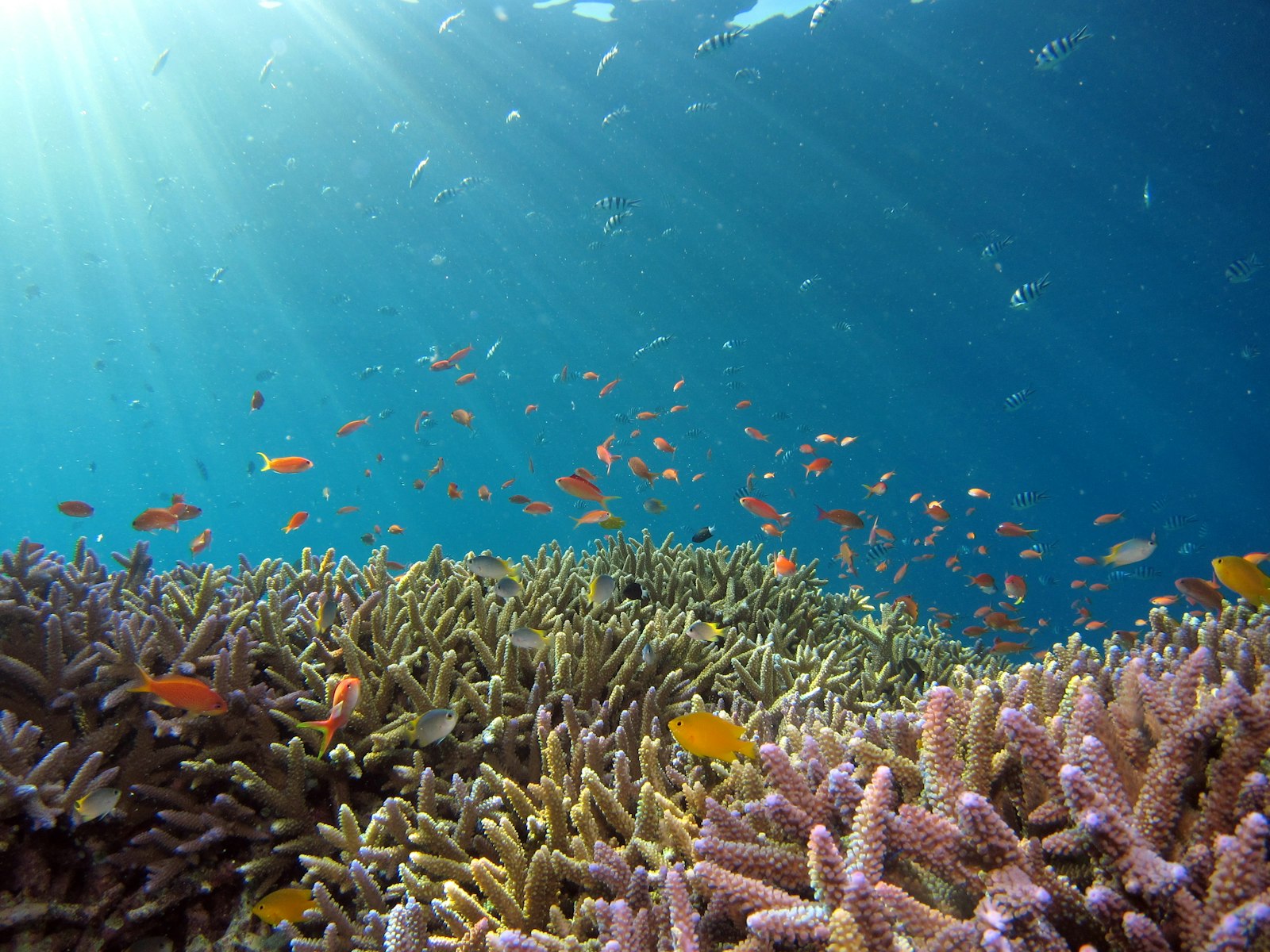
The Galapagos archipelago divides into two main dive zones. The central islands (Cousins Rock, Gordon Rocks, Bartolomé, the seamounts off Santa Cruz) offer mixed reef diving with sea lions, schooling fish, and the chance of mola mola in cooler months. Surface conditions are generally protected; current is moderate; the diving is engaging but accessible. These are the dives that get most of the "fun" labels in trip logs.
The northern outposts, Darwin and Wolf, are where the boat parks for two or three days and you do four dives a day at the same two seamounts. This is the pelagic core of a Galapagos trip. Scalloped hammerhead schools at Darwin Arch in mid-water, silky aggregations near the surface, Galapagos shark fly-bys at depth, and from July through November the chance of resident whale sharks crossing the site. The water at Darwin and Wolf runs cold (18 to 22 °C in season, occasionally colder in El Niño years), the current is significant, and the dives are typically negative entries straight down to 25 to 30 metres to hook in on the rock.
You'll do the Darwin and Wolf rotation for two or three days, then steam back south, then dive the central islands again for another day or two. The pacing matters. By the time you're at Darwin you're warmed up; by the time you leave you've earned the easier dives that follow.
Cocos: the same seamounts, over and over
Dirty Rock, Manuelita, Alcyone. Three or four primary dive sites that you rotate through, three to four dives a day, for seven or eight days. The same two seamounts in many cases. The same hammerhead cleaning stations. The same silky tornado at the surface during your safety stop. The repetition is the point. The hammerheads aren't guaranteed on any single dive, but across 25 dives in a week you'll see them in numbers that make Galapagos look quiet.
Cocos has more surge than Galapagos, less variety in topography, and almost no shallow reef. It's a destination for divers who want the same big-animal interaction over and over, refined and amplified across the week. The night dives at Manuelita with the whitetip reef shark hunting parties are some of the best night diving anywhere on earth; you do them three or four times across the trip and they don't get old.
Conditions and difficulty
If we had to rank the two for raw difficulty, Cocos is harder. The surge at Alcyone in particular can be punishing; the dive is at 25 metres on a seamount that sits in 200 metres of water, and the swell moves the entire water column when it picks up. Galapagos at Darwin has serious current but less surge; the technique is "drop, hook, watch, ascend" and it's repeatable. Cocos demands more dive-by-dive judgment from you and the divemaster.
Visibility on both is typically 15 to 25 metres in season, with occasional drops into the 8 to 12 metre range when the upwelling brings cold, plankton-rich water. The plankton is the reason the sharks are there; the trade-off is that the photography is harder than in clearer destinations.
The animals
Both trips deliver shark diving at world-class densities. The species mix differs in meaningful ways.
| Species | Galapagos | Cocos |
|---|---|---|
| Scalloped hammerheads | Excellent (Darwin and Wolf, Jul–Nov) | Outstanding (year-round, peak Jun–Sep) |
| Whale sharks | Reliable Jul–Nov at Darwin | Occasional, no peak season |
| Galapagos sharks | Common | Common |
| Silky sharks | Surface aggregations | Surface tornado most days |
| Tiger sharks | Occasional | Reliable at certain seamounts |
| Mola mola | Aug–Nov in cooler water | Rare |
| Marble rays | Common | Common |
| Whitetip reef sharks | Day and night | Outstanding night dives at Manuelita |
| Sea lions | Excellent, daily encounters | None |
| Marine iguanas | Excellent (in-water at certain sites) | None |
| Galapagos penguins | Occasional underwater encounters | None |
The headline differences in plain words
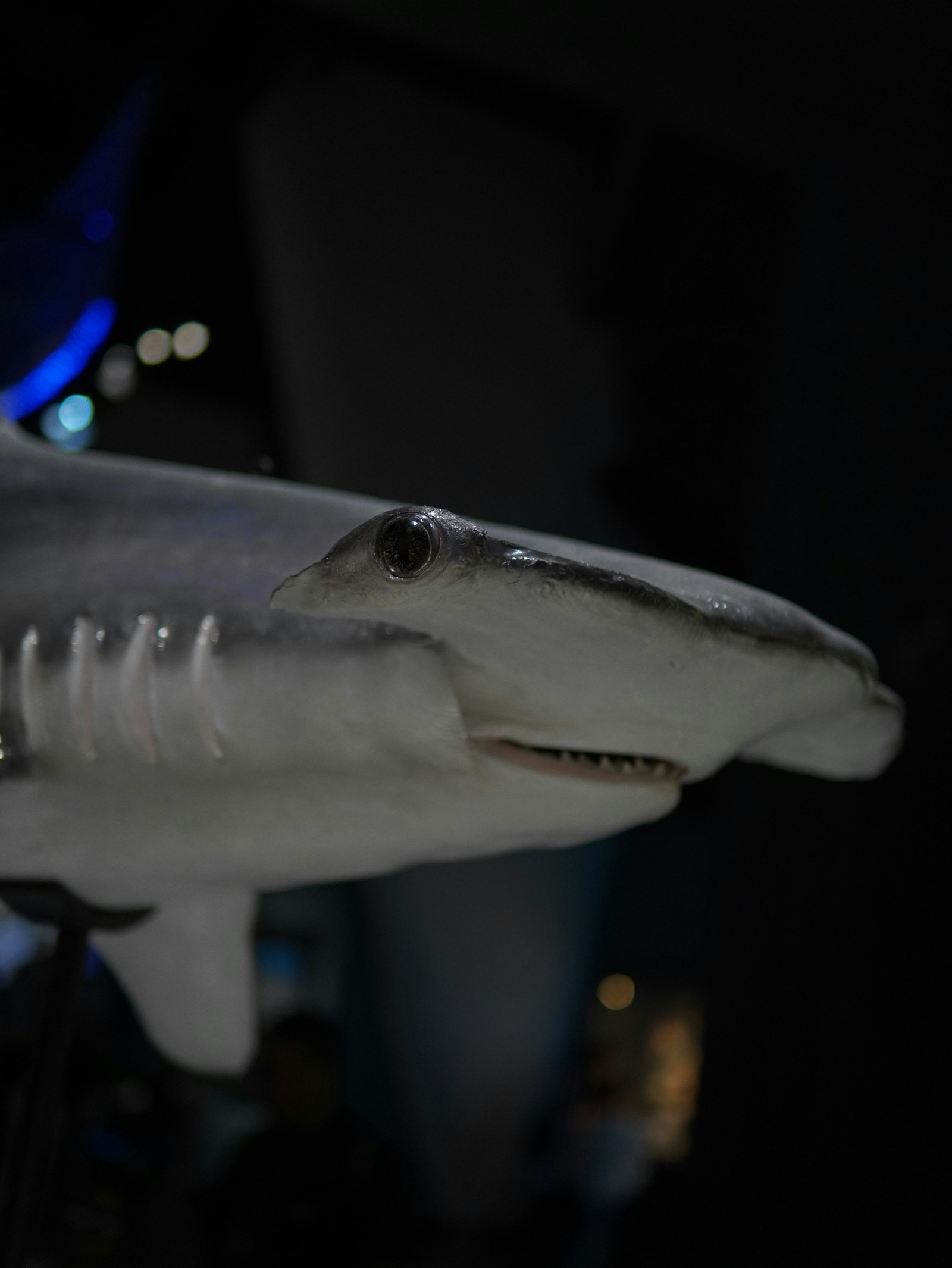
Galapagos has more variety: the same trip gives you hammerheads and sea lions and mola mola and marine iguanas. Cocos has more sharks: the same trip gives you hammerheads and hammerheads and hammerheads, and on a good day also tigers.
If you keep a dive log organised by species, Galapagos will fill it across more categories. If you keep a dive log organised by "encounters with my target species," Cocos will fill it faster.
Cost, roughly
Both trips price in the same band. $5,500 to $8,500 per person for the cruise itself, before flights, park fees, and tips. The variation is mostly cabin grade. The same boat will run $5,500 for a lower-deck twin and $8,500 for an upper-deck stateroom.
Galapagos has higher mandatory park and transit fees (budget another $300 to $450 per person, paid in cash on arrival or pre-paid through your operator). Cocos asks for a higher tip pool (typically 10% of the trip cost) because the crew is at sea longer and you'll get to know them well over 12 nights. The day-by-day spending on the boat (drinks, marine park bracelets, gift shop items) is similar.
Add international flights and you're at $7,000 to $10,000 all in for either destination from a typical European or US starting point. The hidden cost is time off work; both trips realistically need two weeks of leave to do properly, three if you're going to add any side travel.
Where you might save
Both destinations have shoulder windows where pricing softens. Galapagos shoulder is March through May (cool season tail and warm season opening). Cocos shoulder is late October through November and the first half of January. The species mix changes slightly in shoulder weeks, but the headline species are still present. Use our trip search to filter by date range and watch for the discount badges.
Topside
Galapagos: the archipelago is half the trip
This is the part most "which is better" comparisons skip. Galapagos itineraries typically include two or three short land excursions: a sea lion colony, a giant tortoise reserve, the Darwin Research Station on Santa Cruz. Most operators schedule these on transit days when you're moving between dive zones. The encounters are real, not staged. You'll snorkel with sea lions in the shallows of a beach where the same sea lions sleep on the sand at night. You'll watch marine iguanas swim down to graze the reef from a snorkel, which is a sight that even non-divers in your group will remember.
For divers travelling with a non-diving partner, this matters. Galapagos has a coherent "non-diver friendly" experience that Cocos lacks entirely.
Cocos: an empty island and a long sea
Cocos is an uninhabited national park. There is one ranger station and not much else. You won't go ashore on most trips beyond a brief boat-side photo opportunity. The topside experience is the boat and the sea. For divers who want to spend a week thinking only about sharks, this is fine. For travellers who want a destination that delivers anything beyond diving, Cocos is a hard sell.
Who each trip is right for
Galapagos is right for
- First-time pelagic divers who want a great hammerhead experience without a 36-hour crossing.
- Photographers who want a varied portfolio: pelagic, reef, behavioural, terrestrial.
- Divers travelling with a non-diving partner who'll enjoy the land days.
- Anyone who'd rather do one trip that delivers four species reliably than one trip that delivers one species in extraordinary density.
- Divers with limited PTO who can do a 7 or 8-night trip plus a couple of buffer days.
Cocos is right for
- Experienced divers who've done Galapagos or Socorro and want the next-level pelagic week.
- Divers who genuinely enjoy doing the same dive site many times with subtle variations.
- Those who want a definitive hammerhead trip and are willing to optimise everything around that single goal.
- Divers comfortable with extended open-ocean travel, surge, and a less varied topside experience.
- Anyone who has the PTO and the budget for a 12-night trip plus travel buffers.
If you're going to do both
Do Galapagos first. It's the gentler introduction to negative entries, current diving, the cold-water shark sites, and the kind of dives where you hold onto a rock and watch sharks for 25 minutes. By the time you book Cocos, you'll know whether you actually enjoy that style of diving, and at $8,000 a trip, that's a useful thing to know in advance.
Three years between trips is a comfortable rhythm. It gives you time to log the dives that keep your certification current, save the money, and decide whether the second trip should be Cocos or another pelagic destination entirely (Socorro, for instance, which has more in common with Galapagos than with Cocos in terms of dive structure).
One pattern we see often: divers book Galapagos as a "bucket list" trip and Cocos as a "now I know I love this" trip. The ones who try to do it the other way around sometimes find that 12 nights at sea looking for hammerheads wasn't quite what they had in mind. Sequence the easier trip first.
What about Malpelo and Socorro?
While we're comparing Pacific pelagic destinations, two others deserve a mention.
Malpelo (Colombia) is the third corner of the eastern Pacific hammerhead triangle. The diving is similar to Cocos in style and species, the crossing is similar in length (30 to 36 hours from Buenaventura). The window is narrower (mostly June through September) and the operator pool is smaller. If you've done Cocos and you're hungry for the same diving in a less-trafficked location, Malpelo is the move.
Socorro (Mexico) sits in a different category. The crossing is comparable (24 hours from Cabo San Lucas), but the species mix is different: giant Pacific mantas instead of hammerhead schools, dolphin encounters, occasional whale sharks. Socorro is closer to Galapagos in dive variety and to Cocos in operator culture. If you want to do all four (Galapagos, Cocos, Malpelo, Socorro), the natural sequence is Galapagos, Socorro, Cocos, Malpelo, spread across four to six years.
Frequently asked questions
How many dives will I actually do?
On a 7-night Galapagos trip, plan on 18 to 22 dives. On a 10-night Cocos trip, plan on 24 to 28 dives. The dive counts are similar per day; Cocos has more days actually diving once you subtract the crossing time.
What certifications do I need?
Open Water + Advanced + Nitrox is the practical minimum for both. Most operators require Advanced Open Water with at least 50 logged dives. Some Cocos operators require 100+ logged dives. Bring your certification cards (digital is fine on most operators, paper still works everywhere). If you're doing the Darwin and Wolf rotation, the boat will want to see your last six months of dive log entries.
Will I get seasick?
Galapagos: usually not. The boat moves at night between zones and stays anchored during the day. The longer crossing to Darwin and Wolf is overnight and can be moderately rough but rarely awful. Cocos: the crossings are the main risk. Pre-treat with a scopolamine patch or take cinnarizine the night before. The crossings out and back can be rough enough that the bar shuts down; bring the medication you trust.
Can I do these trips solo?
Yes. Both destinations have boats that take significant numbers of solo travellers. The single supplement is usually around 50 to 75% of the cabin rate on Galapagos and 30 to 50% on Cocos. The social rhythm of both boats works well for solos; you'll know everyone on the boat by day three.
Are there El Niño risks?
Yes. Both destinations are affected by ENSO patterns. El Niño years (warmer water, weaker upwelling) push pelagic species deeper and reduce hammerhead aggregation density. La Niña years (colder water, stronger upwelling) intensify the same patterns. Check ENSO forecasts at the time of booking; the major operators publish recent trip reports that give you a sense of current conditions.
What about underwater photography?
Both destinations reward photographers, but they're hard. Cold water, deep dives, current, surge, low ambient light. Wide-angle is the dominant style; bring fish-eye if you have it. Macro opportunities exist (especially on the night dives at Cocos and the central islands of Galapagos) but they're secondary. The serious advice for both: get the housing dialled in at home for at least three months before the trip. The dives aren't the time to be learning your gear.
The recommendation
If you have one of these in your future, do Galapagos. It's a more flexible trip, an easier first attempt at this style of diving, and the variety means it works better as a single-destination story to tell. The Galapagos archipelago is a UNESCO World Heritage Site for reasons that have nothing to do with diving; the trip lands as a "thing I did" beyond the dive log.
If you have both in your future, do Galapagos first and Cocos two to three years later, after you've decided whether the dive style suits you. The Cocos trip will hit differently when you arrive already loving the rhythm of negative entries, hook-in dives, and shark fly-bys at depth.
Browse current Galapagos liveaboards and Cocos Island liveaboards, or use our trip search to filter by date range across both destinations. If you want a steer on which specific operator handles the diving style we've described above, reach out. We've been on most of these boats and we can point you at the ones with the captains who actually deliver the trip you're trying to book.