The Red Sea is one of the easier liveaboard destinations to pack for. The boats are large and modern, the water is warm enough that you can get away with a 3 mm wetsuit for most of the year, and Hurghada and Marsa Alam are short flights from most of Europe. None of that stops people from showing up with two oversized suitcases of things they will not use, and a thin dive kit that's missing two items the boat doesn't stock. After a decade of running and outfitting these trips, the pattern is exhausting and consistent.
What follows is a practical packing list for a 10-night Egypt Red Sea safari, written by people who have done these trips dozens of times and watched exactly what comes off the boat unused at the end of the week. There are a few opinions in here. You'll notice we don't recommend a single brand; the brand wars are exhausting and the gear that actually matters is the gear you'll trust.
Before you pack, understand the trip
Ten-night Red Sea itineraries typically include around 28 to 32 dives. Most boats run four dives a day from day two through day eight, two on day one (a short shakedown), and an early dive on day nine. You'll spend roughly two-thirds of your daylight hours either in the water, in a wetsuit, or in a swimsuit waiting for the next dive. The remaining third is meals, sleep, and surface-interval reading.
Three big itinerary buckets shape what you should pack:
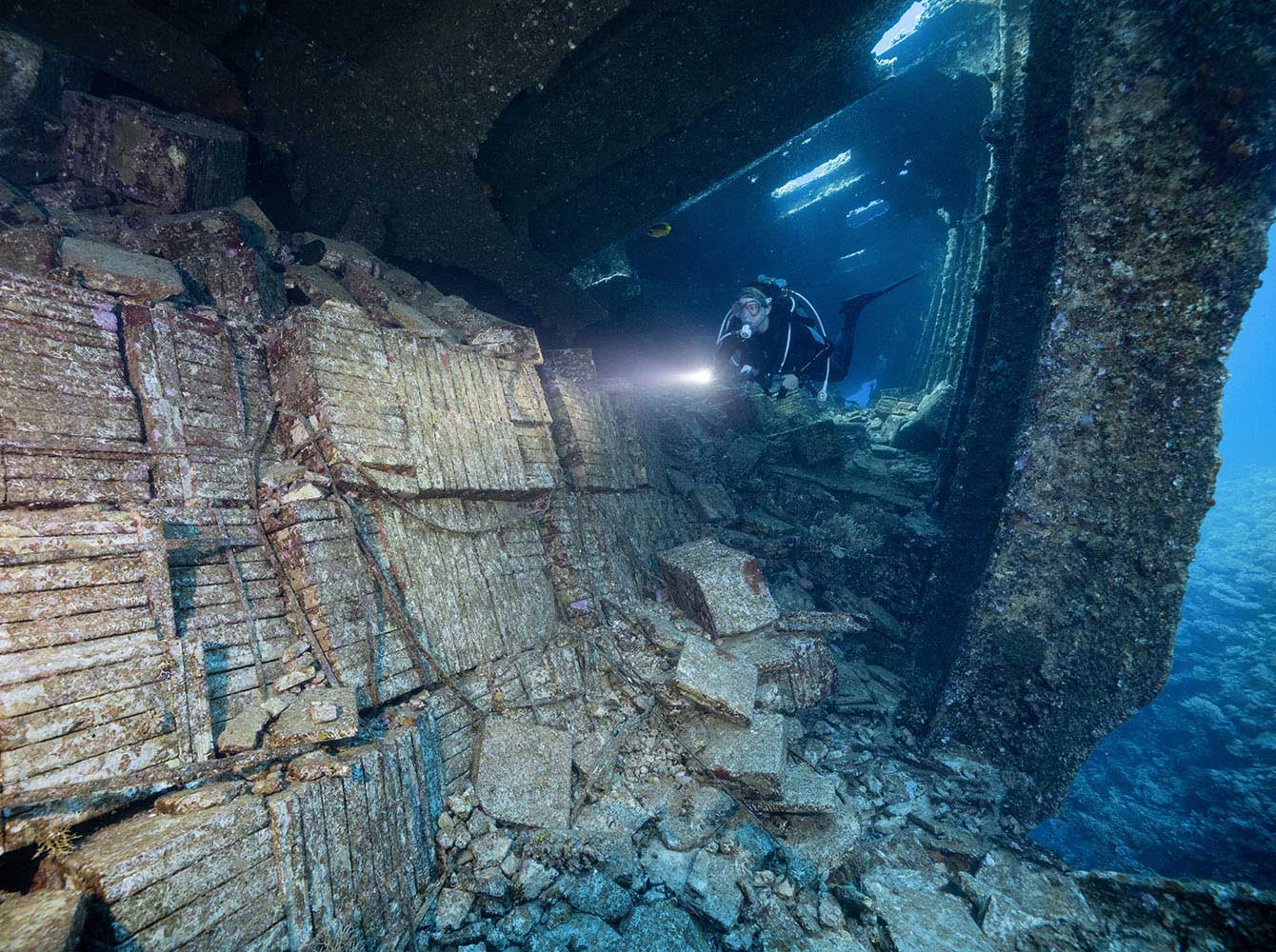
- Northern wrecks (Thistlegorm, Rosalie Moller, Carnatic, Giannis D, Chrisoula K). Cooler water, wreck penetration, depth. Often combined with the Brothers or Daedalus.
- The Brothers, Daedalus and Elphinstone (BDE). Pelagic-heavy, current-driven, deep walls. Reef hooks earn their place. The dives are not technical but they are exposed.
- Southern reefs (Fury Shoals, St John's, Sataya, Habili Ali). Warmest water, gentlest current, the best macro. Often the choice for divers who want a calmer week without losing the world-class diving.
If you don't know which itinerary you've booked, find out before you pack. The northern wrecks need a thicker wetsuit, a proper dive light and a backup, and a slightly more conservative attitude. The southern reefs can be done in a 3 mm and a snorkel.
Luggage
One soft-sided duffel bag, 70 to 90 litres. Soft-sided is critical. The cabins have shallow shelves under the bunks, and a hard suitcase will not fit; it'll end up wedged in a corridor or strapped to the dive deck. Most operators will collect your empty duffel at boarding and store it for the week.
One day pack for the flight, 25 to 35 litres, with anything that has to stay with you in cabin baggage: regulator, dive computer, mask, prescription medication, two days of underwear, and a charging cable. If your hold luggage is delayed (and Hurghada loses bags more often than European hubs do, sadly), you can rent fins, wetsuit, BCD and tank on the boat. You can't reasonably rent a computer that you trust, and you don't want to lose a day waiting for your bag.
One small dry bag, 10 to 15 litres, for the trips ashore. The local operators in Hurghada and Marsa Alam sometimes run an afternoon excursion to a Bedouin village or a desert site; the dry bag keeps your phone and wallet separate from your dive gear in transit.
Dive gear that earns its place
The Red Sea is forgiving until it isn't. The water is warm but the dive schedule is relentless: four dives a day for seven or eight days adds up to a lot of time wet. Pack for comfort and reliability, not minimums.
Wetsuit
3 mm from May through October, 5 mm from November through April, 5 mm plus a hooded vest if you run cold. The northern wrecks itineraries sit in slightly cooler water than the southern reefs (surface temperatures can be 22 to 24 °C in February versus 26 to 28 °C in August), so factor in your specific weeks. Two days of being cold on a 10-day trip will spoil the whole week.
One wetsuit, not two. The boat will rinse and dry it overnight in the bath. The exception is if you're doing four cold dives in a row in February; a second 3 mm shorty layered under the 5 mm gives you a thermal upgrade without buying a new suit.
Rash guards and dive skins
Two sets of rash guards or dive skins. One on, one drying. The boat laundry is for emergencies, not for daily turns. A good long-sleeve rash guard also doubles as your sun layer on the deck and your "I forgot to put on a shirt" cover for dinner.
Mask, snorkel, fins
Bring your own. Boat rental fins fit fine; boat rental masks famously leak. A mask is the single most personal piece of dive kit and the cheapest one to own. Bring a defogger that works (baby shampoo, commercial defog, even toothpaste in a pinch).
Regulator, octopus, computer
Service the regulator the month before. The Red Sea is a forgiving environment until something free-flows at 25 metres on a wreck. Bring spare second-stage mouthpieces if you've had them tear before. Computers need fresh batteries (check the indicator) and the right software for the dive profile you're planning. Most Egypt liveaboards now download computer data via Bluetooth to the daily briefing screen, which is brilliant but only works if your computer talks to the boat's tablet. Test it at home.
BCD
Optional. Boat rental BCDs in the Red Sea are mostly current-generation and fit a wide range of body shapes. The argument for bringing your own is the time it shaves off setup each morning (you know where the dump valves are, the integrated weights are familiar, the lift is the right amount for your trim). The argument against is luggage weight; a BCD is a kilo or two you have to fly with.
SMB and reel
Mandatory on most Red Sea boats now, and not just for show. The Brothers and Daedalus drift dives often end with the group ascending in mid-water and surfacing well downwind of the boat. The SMB tells the zodiac driver where you are. If you don't own one, buy one and practise deploying it from 5 metres in your home pool before the trip. Deploying an SMB from depth for the first time on the Red Sea is the worst time to discover that your reel jams.
Reef hook
Not strictly required, but useful on Daedalus, Elphinstone, and the back reef at Habili Ali. The hook lets you hold position in current to watch a shark school or wait out a thresher pass without finning. Get one with a stainless gate and at least a 30 cm webbing leash; the budget plastic-gate hooks are flimsy.
Save-a-dive kit
Spare mask strap, fin strap, computer battery, o-rings, silicone grease, zip ties, electrical tape, a small adjustable wrench. The boat will have most of this, but not all of it, and the boat's spares are in a locked locker that requires finding the right crew member. A small kit in your gear bag saves you fifteen minutes on day three.
Dive light and backup
Required for the wreck penetration on the Thistlegorm and for any night dive (most 10-night itineraries include at least one). A primary canister light is overkill for the Red Sea; a strong handheld light (2,000 to 4,000 lumens) plus a small backup is the right kit.
The nitrox question
Most Red Sea operators charge €100 to €150 for the week for nitrox. Pay it. The reefs are deep enough and the dive schedule busy enough that nitrox meaningfully extends your bottom time and your week, and it noticeably reduces day-three fatigue. We've written a longer explainer on how nitrox works on liveaboards if you want the full economics.
Clothes
You will spend most of the day wet, in a swimsuit, on a sundeck. The amount of dry clothing required is genuinely modest. Most divers pack twice as much as they need.
- 3 to 4 swimsuits on rotation. Quick-dry fabric; the cabin shelves don't breathe well.
- 2 pairs of board shorts or quick-dry trousers for around the boat.
- 4 to 5 t-shirts, technical fabric preferred (wool blends are excellent on a salty deck).
- 1 long-sleeve shirt for the evening sundowner. Red Sea evenings are warm but breezy, particularly between November and March.
- 1 light fleece or hoodie. Mostly for surface intervals in winter, but also for the air-conditioned cabin if you find the AC heavy.
- 1 pair of flip-flops. The only shoes you'll wear. Bring rubber-soled ones; the deck gets slippery.
- 1 pair of light closed-toe shoes for the airport transit (Hurghada arrivals hall can be a long walk from gate to baggage claim).
- Underwear and socks for the travel days, not for every day on the boat. You'll change into swim kit at 8 a.m. on day one and stay there.
- One "going to dinner in town" outfit if you have an overnight hotel either side of the boat. Otherwise skip it.

Sun and skin
You're on a boat in the desert. The sun is unrelenting and reflective off the water. Underestimating the Red Sea sun is the single most common rookie mistake. By day four you'll look like a tomato; by day six the sunburn will be peeling and getting into your wetsuit will hurt.
- Reef-safe sunscreen. SPF 50, water resistant, zinc-based. Bring more than you think you need (200 ml minimum for a 10-night trip). Most boats sell sunscreen at a noticeable markup, and the brands available aren't always reef-safe.
- A wide-brimmed hat with a chin cord. The cord matters. Hats blow off sundecks and the boat won't turn around for them.
- Polarised sunglasses plus a backup pair. The backup is for the day the primary pair goes overboard on a tender ride. It will happen to someone in your group.
- A light, long-sleeved sun shirt. For the days when even SPF 50 isn't enough, or when you've already burnt the back of your neck on day two.
- Lip balm with SPF. Salt and sun crack lips fast. A regular Chapstick is fine; an SPF 30 version is better.
- Aftersun or aloe gel. For the day you get the sun wrong anyway.
- A buff or thin neck gaiter. Underrated. Doubles as a sun cover for your neck while diving (under the hood) and a wind layer on the upper deck at night.
Medicine and toiletries
Egypt has good pharmacies in the major cities and the major resorts, but you won't have access to them once the boat sails. Plan for the trip plus three extra days of buffer.
- Prescription medication for the whole trip plus three extra days, in its original packaging with the pharmacy label intact. Customs in Hurghada is generally relaxed, but the original packaging is your friend if you're carrying anything controlled.
- Sea-sickness tablets (cinnarizine or scopolamine patches). Even if you don't normally need them, bring some for night two when the swell picks up. Cinnarizine is non-drowsy, sold over the counter in Egypt as Stugeron; bring a strip with you anyway.
- Ear drops, alcohol-based or specifically formulated for divers. Ear infections are the number one reason people miss dives in the Red Sea. A few drops in each ear after the last dive of the day, every day. Cheap insurance.
- Decongestant for the day your sinuses won't equalise. Sudafed-equivalent (pseudoephedrine) is fine; check current Egyptian customs rules if you're carrying more than a strip.
- Ibuprofen, paracetamol, antihistamines.
- Plasters and antiseptic. Most boats have a full first-aid kit, but reaching for your own at 2 a.m. is faster.
- A small probiotic course if you're prone to traveller's stomach. Food on the better Red Sea boats is genuinely excellent, but the first three days of any travel disrupt the gut.
- Hand sanitiser. The boat soap is fine for hands but a small bottle in your day bag is useful.
Electronics and charging
- Phone, charger, EU-style plug adapter. Most Red Sea boats are 220V European-style plugs (Type C and F). Don't assume; check your boat's spec sheet.
- Kindle or a book. Surface-interval reading time is real. Solo divers in particular should bring something to read; the social rhythm of a Red Sea boat alternates between sociable meals and quiet between-dive rest.
- Underwater camera if you bring one. Spare batteries, spare SD cards (high-capacity, with backup; the volume of footage from a 10-night trip is no joke), and a small dry box. Service the housing seals before leaving home, not at the dive shop in Hurghada.
- A small powerbank, useful for charging in the cabin overnight without leaving devices on the deck outlets where they pick up salt spray.
- Headlamp with a red-light mode. For the cabin and for stumbling to the bathroom at 3 a.m. without lighting up your cabinmate.
- A small USB-C / USB-A adapter cable for the boat saloon, where the charging stations are sometimes a mix of standards.
The three things people always forget
- Cash for tips, in euros. The crew tip is typically €100 to €150 per diver per week and is genuinely expected, not optional. Bring it in clean €10 and €20 notes. ATMs at Hurghada airport are unreliable and the rates are bad. Egyptian pounds are accepted but harder for the crew to use; euros are the standard.
- A reusable water bottle. Most boats have water coolers and ask you not to use the single-use bottles for environmental reasons (and to keep the cabin shelves clear of clutter). The bottle also doubles as your hot-water bottle for cooler dive days; the chef will fill it with hot water on request.
- The dive insurance card. DAN or equivalent. Most boats now ask to see it at check-in and won't allow you on the dive deck without it. A printed copy is fine; a phone screenshot is acceptable on most boats but not all.
What you can leave at home
- Tactical-grade dive knives. Modern Red Sea operators have moved away from them entirely. A small line cutter clipped to your BCD is the modern equivalent.
- Hair dryers. The boat will provide one if you ask. The cabins are too humid for them to be useful for actual hair drying, but they're useful for drying out a camera housing or a stubborn computer pin.
- Three changes of "evening wear". You will eat dinner in board shorts. Possibly a fresh t-shirt. That's it.
- Snacks. The galley is fully stocked and you'll be fed every 90 minutes. Most boats include a "between dive" snack platter that's substantial enough to count as a small meal. Diet bars are an exception; bring them if you have specific dietary needs.
- A second pair of fins. One pair is enough. Liveaboards are not the place to try out different fin systems mid-week.
- A drysuit. Even in February the water is warm enough that a 5 mm with a hood is comfortable; a drysuit is overkill and creates more problems than it solves on a Red Sea boat (changing rooms are small, drying is slow, the trim is unfamiliar).
- Hard-shell camera cases bigger than the cabin's under-bunk space. Measure your case against 60 × 40 × 25 cm before you fly. Larger and you'll end up storing it strapped to the dive deck, which is fine in port and stressful at sea.
Three small upgrades that earn their place
A microfibre towel
The boat provides towels but they're full-size cotton, slow to dry, and heavy. A microfibre travel towel is a 200 gram addition that gives you a personal-use towel for the dive deck that dries in twenty minutes. Worth it.
A small hard pelican case for batteries and electronics
Salt and electronics don't mix. A small hard case (15 × 10 × 5 cm or so) keeps your spare camera batteries, GoPro mounts, and computer charging cable bone-dry in the cabin. The cabin closets are humid enough that anything sitting in them for a week will start corroding.
Decent earphones for the surface intervals
Bose or Sony noise-cancelling earbuds, or your equivalent. The boats are loud (engines, compressors, the chef in the galley) and the saloon TV is on more than you'd think. Twenty minutes of silence with your own music between dives is a small luxury that becomes essential on day five.
The day of the flight: a small checklist
- Dive insurance card printed and in your wallet.
- Logbook (digital is fine on most boats; paper is still accepted everywhere).
- Certification cards (Open Water, Advanced, Nitrox, anything else).
- Passport with at least six months' validity from your trip end date.
- Egypt e-visa printed or downloaded offline. Visa-on-arrival is also an option for most nationalities but the e-visa is faster.
- The boat's address and contact phone number, written on paper, in case your phone dies at Hurghada arrivals.
- Empty water bottle in your day bag, ready to fill after security.
Frequently asked questions
What weight allowance should I expect on the boat?
The boats don't enforce a weight limit on luggage, but airlines do. EgyptAir, Lufthansa, KLM and the budget carriers serving Hurghada all allow either 23 kg or 32 kg in the hold (depending on ticket class) and 7 to 10 kg in cabin baggage. Dive gear typically runs 18 to 22 kg, so a single 23 kg allowance is usually enough if you're disciplined. Pay for the heavier allowance if you're bringing camera kit.
Do I need a power adapter?
Most boats use Type C and F (European two-pin and two-pin with earth). If your country uses Type A (US), Type G (UK), or Type I (Australia), bring an adapter. A universal one with USB-C and USB-A pass-through is the best version to own.
What's the food like?
On the established Red Sea operators, the food is genuinely good. Three meals a day plus a substantial between-dive snack. Fresh fish, chicken, vegetarian options on every meal, fruit, salads. Most boats will accommodate dietary needs (gluten-free, vegetarian, vegan, kosher, halal) if you flag them at booking, not at arrival. The honest answer is that the boat chefs work harder than land-based hotel chefs and produce more interesting menus.
Is alcohol available?
Yes on most boats, but priced more like a hotel than a supermarket. A beer is typically €4 to €6, a glass of wine €6 to €9. The crew run a tab and you settle at the end of the trip. If you want a specific bottle of wine for an evening, bring it; the boats will store it for you and serve it without a corkage fee on most operators.
Can I dive in October if I have a sinus condition?
The Red Sea air is dry, which is generally helpful for sinuses. The biggest sinus issue divers run into is the change in cabin humidity (high, salty) versus the dry air conditioning. If you have a known sinus condition, pre-treat before the trip with a saline rinse for a week and check with your dive doctor about decongestant use during the trip. Don't dive with an active infection; you will rupture an eardrum and lose the week.
What if I forget something critical?
Hurghada has decent dive shops near the marina; Marsa Alam is more limited. If you're flying via Cairo with a layover, the airport dive store has masks, snorkels, fins and basic regulators at airport-shop prices. Most operators will lend or rent missing items (regulators, BCDs, computers) at modest day rates. The two things you genuinely can't replace at the dock are prescription medication and your dive insurance card; everything else has a workaround.
One last thing: the boat is small
Liveaboards are intimate by design. Eighteen to twenty-eight divers, plus crew, share corridors, meal tables, dive decks, and conversation for ten nights. Pack the kit you need; pack a little patience too. The packing list above is built around what makes the week easier for everyone on the boat, not just for you. The diver who shows up with the right gear, in soft luggage, with their own SMB and their own positivity is the diver everyone wants on the next trip.
Browse current Egypt Red Sea liveaboard departures when you're ready to book, and reach out via our contact page if you want a second opinion on a specific itinerary. We've been on most of these boats and we're happy to talk through which one matches your goals for the trip.