The Maldives is one of the few diving destinations where the "best month to go" question genuinely has different answers for different itineraries. The country spans almost 900 kilometres north to south. The monsoons rotate twice a year. The currents that bring the big animals run on the opposite side of the atoll depending on the season. Get the timing right and you spend a week parked in front of grey reef sharks, mantas at the cleaning stations, and the occasional whale shark gliding through a channel. Get it wrong and you spend a week looking for something to do between dives at sites where the conditions stopped firing two months ago.
This is an atoll-by-atoll calendar for anyone planning a Maldives liveaboard. It won't replace a good cruise director with twenty years on the water, but it should help you read an itinerary critically before you commit money to it. And it'll help you make sense of why two boats running similar dates can have radically different price points and species expectations.
The two seasons, in one paragraph
The Maldives has two monsoons. The northeast monsoon (Iruvai) runs roughly December through April: drier, calmer, clearer water, and currents flowing west to east through the atoll channels. The southwest monsoon (Hulhangu) runs May through November: more rain, more swell, slightly greener water, and currents flowing east to west. The plankton-rich "green" water of the southwest monsoon is what brings the mantas and whale sharks in close, which is why some of the best big-animal diving happens during what the marketing material calls the "off" season.
Don't believe the off-season framing. The southwest monsoon delivers some of the most species-rich diving in the Maldives calendar. The weather is a little less photogenic, the resort marketing is quieter, but the diving is often better. The trick is matching the itinerary to the season, not avoiding the season altogether.
How the monsoons shape every dive
Before atoll-by-atoll, three concepts worth understanding because they make the rest of this article make sense.
Inside versus outside channels
A Maldivian atoll is a ring of reef enclosing a lagoon. The water inside the lagoon is shallow, calm, and (in season) clean. The water outside is the open Indian Ocean. The channels through the reef are the only paths between the two, and the currents through those channels switch direction with the monsoon. In the northeast monsoon, currents push water out of the lagoon through the eastern channels and in through the western. In the southwest monsoon, it reverses.
The plankton blooms ride the currents. Whichever side is the "incoming" side in a given season is the side where the plankton accumulates, and that's the side where the pelagics feed. Manta cleaning stations, hammerhead aggregations, grey reef shark schools, the big stuff: all of it follows the plankton.
Channel diving versus thila diving
Two diving styles dominate Maldivian itineraries. Channel dives sit in the cuts between atolls, in current, at 20 to 30 metres on the wall or pinnacle. You hook in or drift; you see sharks, schools, sometimes mantas. Thila dives sit on isolated reef pinnacles inside or near a lagoon, usually 12 to 24 metres, calmer, with more macro and reef variety. A good Maldives trip mixes both. A trip with seven channel dives in seven days is exhausting for a less-experienced diver. A trip with one channel dive is a disappointment for a serious shark watcher.
Surface conditions versus underwater conditions
The Maldives in May can look like trouble from the deck: grey sky, scattered squalls, a metre of swell. Underneath, it's often glassy at 5 metres and the visibility is fine. The reverse is also true. A picture-perfect February afternoon at the resort can hide a 40-minute channel dive with low visibility and disappointing fish counts. Don't book on weather forecasts; book on dive reports.
North Malé, Rasdhoo and Ari Atoll, December to April
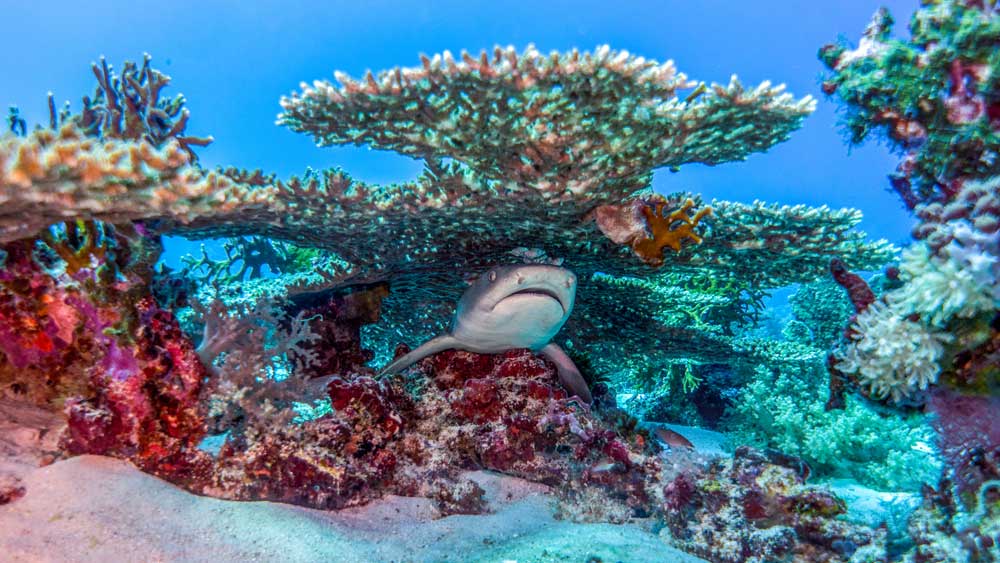
The classic central-Maldives itineraries (most 7-night charters depart from Malé) lean heavily on North Malé, Rasdhoo, and Ari Atoll. These fish best during the northeast monsoon. Banana Reef, Maaya Thila, the famous Fish Head: all show their best colours when the water is clear and the currents are predictable.
Hammerheads at Rasdhoo Madivaru typically appear at first light from December through April. The dive is a deep negative entry off the corner of the channel, descending to 25 metres in blue water, watching for schools to drop down out of the haze. They're scalloped hammerheads, typically in groups of 30 to 80, and the encounters are at the edge of recreational depth. Plan for nitrox and a 6 a.m. wake-up call.
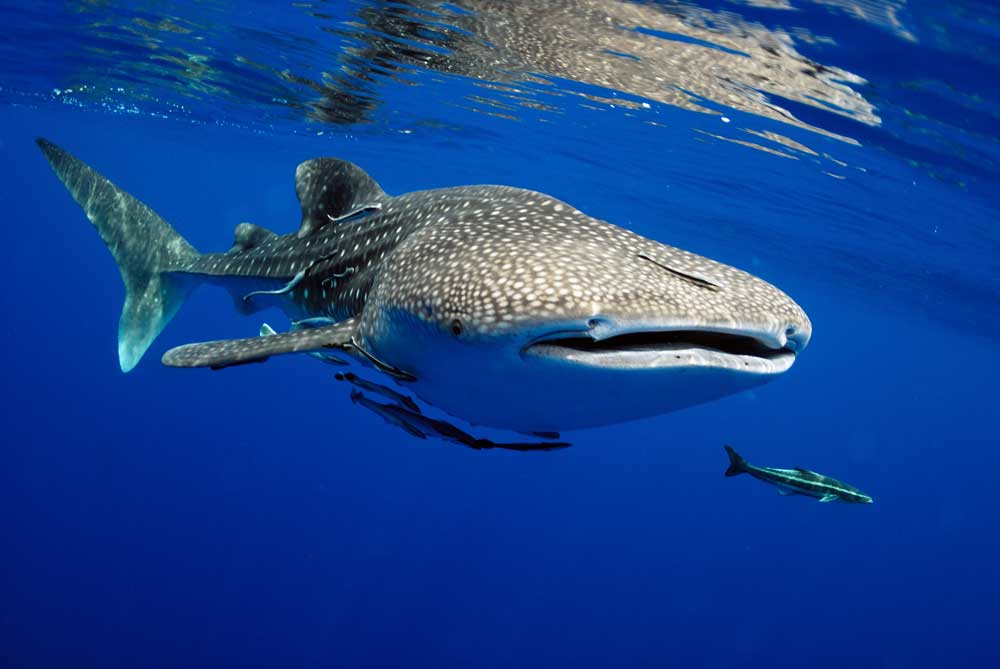
Whale sharks along South Ari's southwest reef show year-round but peak from December to early May. The South Ari marine protected area is essentially a managed whale shark zone; the encounters are usually with feeding adults at the surface. Most operators will do a snorkel encounter rather than SCUBA because the sharks stay shallow.
If you only have one Maldives trip in you and you want a "best of" loop, book it for February or March. The weather is settled, the currents are reliable enough that the dive guides can plan around them, you'll see most of the headline species, and the food and surface conditions are at their easiest. This is the safest single recommendation in this article.
South Ari and the whale shark window: year-round, but read the fine print
South Ari's marine protected area is the one place in the Maldives where whale sharks are essentially resident, feeding on the plankton that gets trapped against the reef edge. Operators run snorkel encounters year-round. The underwater sightings, actually being on SCUBA with a whale shark cruising past, cluster around the seasonal transitions in April through May and October through November, when the currents reverse and the plankton blooms shift.
The catch is that the experience is heavily mediated by the encounter rules. Boats are spaced out along the reef; snorkellers enter the water in small groups; physical contact is prohibited; flash photography is restricted. This is the right way to manage a marine protected area, but it does mean the encounter is less wild than the underwater fly-bys you'll get at less-managed sites. If you've already done unprotected whale shark encounters at Cenderawasih or Donsol, South Ari can feel structured by comparison. If you haven't, it's still one of the best places in the world to see the animal.
Central atolls, manta cleaning stations, May to November
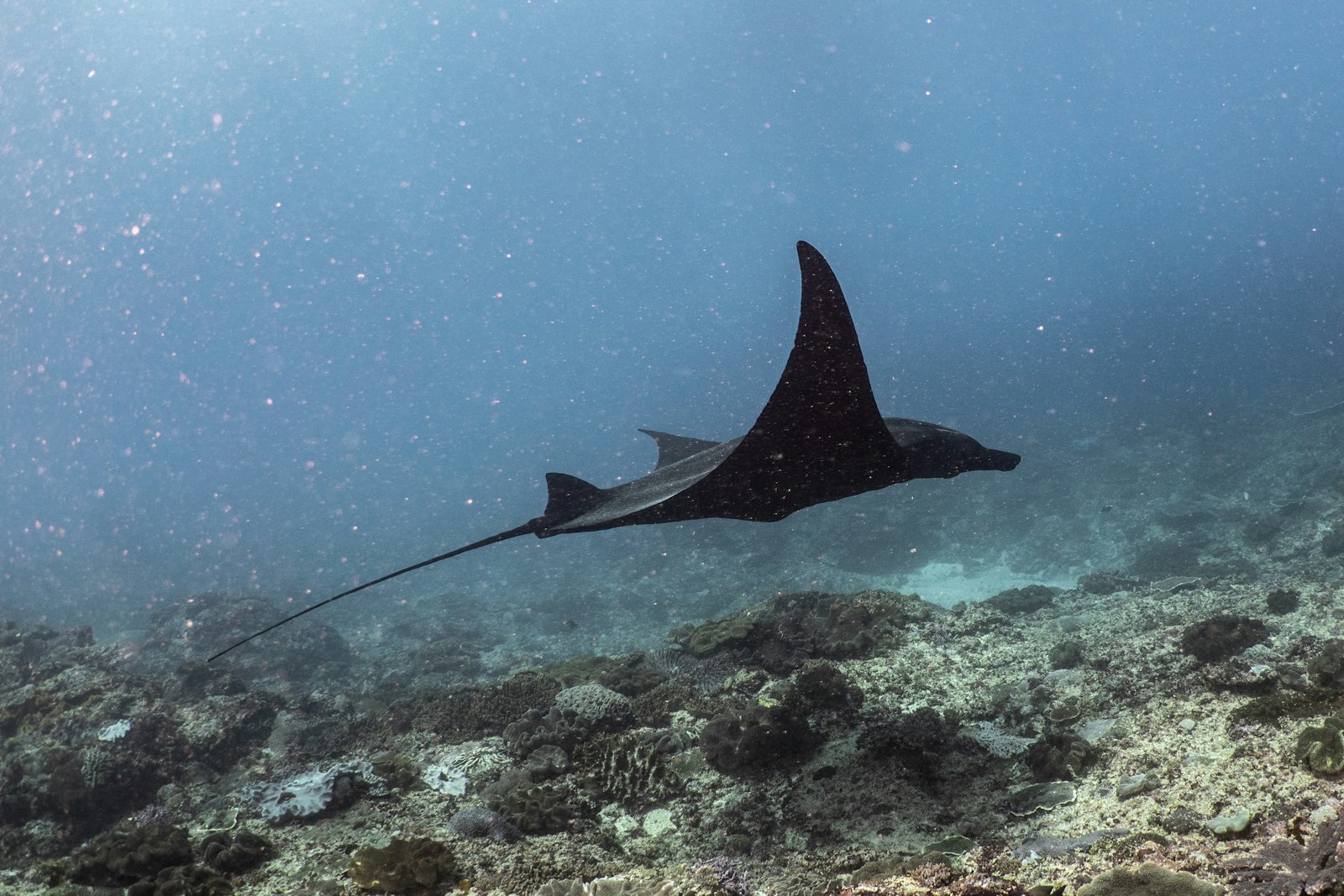
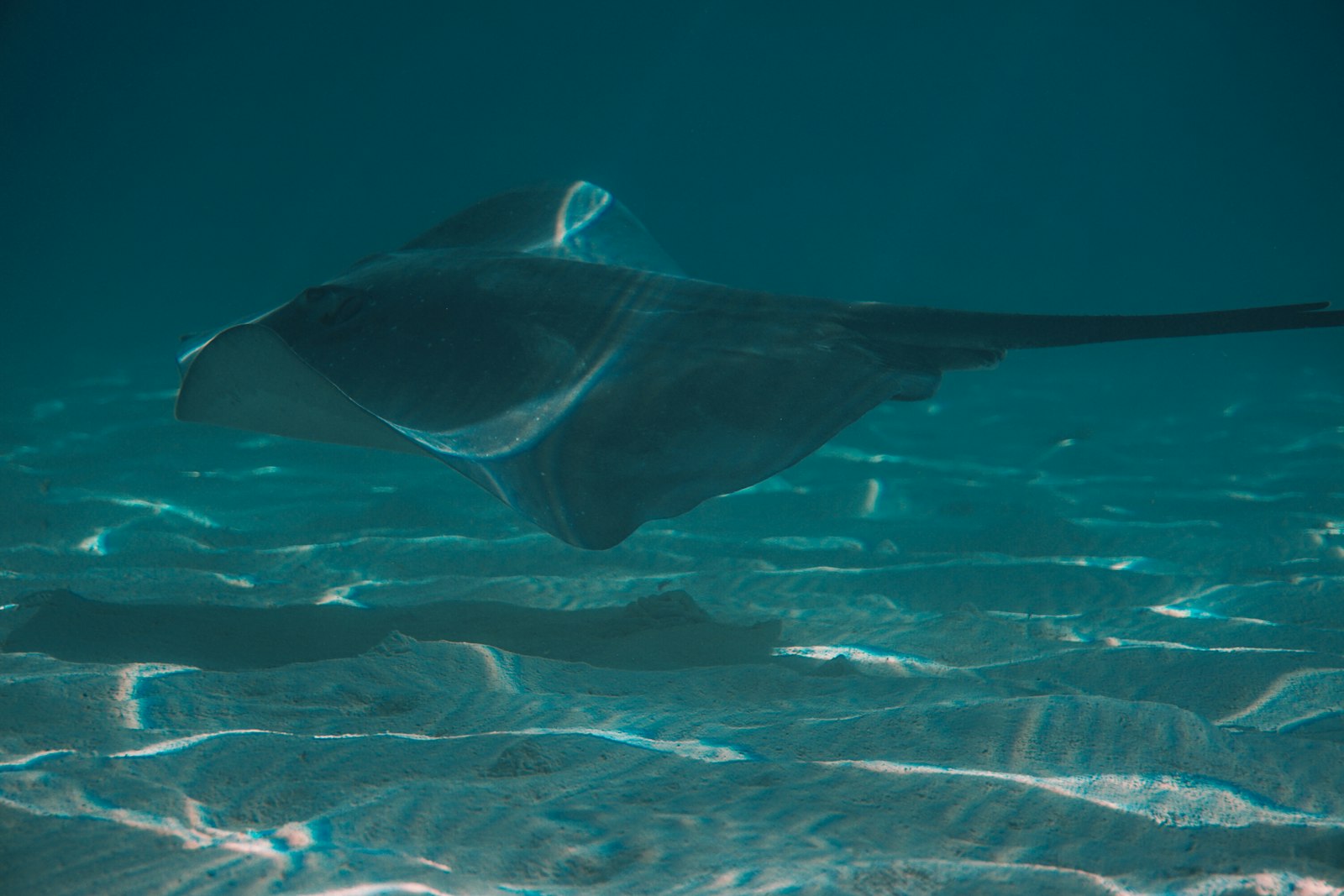
Hanifaru Bay in Baa Atoll is the famous one: the manta and whale shark "soup" that runs from June through October when the lunar tides funnel plankton into the bay. Hanifaru itself is snorkel-only and permit-controlled, and the experience is heavily managed (max 80 people in the water at any one time, max 45 minutes per session, ranger-led). But the rest of Baa, Raa, and Lhaviyani are wide open during the same months and run plenty of SCUBA dives on cleaning stations that get steady manta traffic.
August is the contrarian's choice. Overcast skies, occasional squalls, fewer boats in the central atolls, and you'll see more mantas in a week than most divers see in a decade. The diving is varied: some channel work, plenty of thila dives, the manta cleaning stations as the rotating headline. The southwest monsoon makes for slightly greener water (visibility runs 15 to 25 metres rather than the 25 to 35 of the northeast monsoon) but the plankton is the whole reason the mantas are there.
Hanifaru: what to expect
The bay is a small horseshoe of reef where the tide and the wind combine to push plankton into a dense cloud. When the bloom is strong, mantas (sometimes 40 to 100 individuals) and whale sharks aggregate to feed. They form chains, barrel-roll through the plankton, and feed inches from the snorkellers. It's spectacular and it's photographed to death. Some of the most-shared underwater images you've seen of mantas come from Hanifaru.
The catch (and there's always one): the bay only fires on specific tide and moon combinations. Operators time their itineraries to maximise tide windows, but you can still hit a week when the bay is quiet. Plan for the chance, not the certainty.
The deep south: March to May, August to November
The southern atolls (Huvadhoo, Fuvahmulah, Addu) are essentially a different country. Bigger animals, stronger currents, fewer reefs in close rotation, and itineraries that run 9 to 11 nights instead of seven because you need to relocate. Most southern liveaboards leave from Gan (the airport in Addu) or Kooddoo (Gaafu Alifu) rather than Malé, so factor in a domestic flight from Velana International on either end.
Fuvahmulah, tigers and threshers
Tiger sharks at Fuvahmulah are year-round but easiest to dive from August to November. The dive is a deep tiger encounter (often at 25 to 30 m) at a single dive site (the "tiger zoo") with established baiting practice. The encounters are reliable: three to five different tigers per dive on a good day, identified by markings, with operators keeping records of which individuals are present. Thresher sightings cluster in the same window; they're at depth (35 to 40 m, on the edge of recreational) and require a careful dive plan.
Fuvahmulah deserves its own conversation. It's the only true open-ocean atoll in the Maldives, no protective barrier reef, and the diving reflects that. Surge, current, depth, and the chance of any pelagic species in the Indian Ocean rolling past. If you've done your share of Maldives channel weeks and want something more demanding, this is the trip.
Huvadhoo channel diving
Huvadhoo is the world's largest natural atoll by area. The channel diving here is what you came to the Maldives for: big channels, strong current, grey reef shark schools, eagle ray flybys, and the chance of mantas at the cleaning stations on the inside reef. Best either side of the monsoon shift: March to April and October to November.
Addu and the wrecks
Addu Atoll has the British Loyalty wreck (a 1944 oil tanker, intact, sitting in 30 m of water) and several other wrecks from the WWII British naval base. The diving is unusual for the Maldives: wreck-focused, with a different colour palette (more silt, less coral) than the central atolls. Worth a couple of days as part of a longer southern itinerary.
The shoulder weeks: April and November
If you can't pick between the two seasons, the shoulder weeks of April and November are the right answer. Conditions are in transition (which means slightly less predictable currents, slightly more weather variability), but the species mix often combines features of both monsoons. April can deliver hammerheads (northeast monsoon residue) plus the start of the manta season at the cleaning stations. November can deliver the tail end of the manta aggregation plus the returning northeast monsoon clarity.
Pricing also softens in the shoulder weeks. Operators discount to fill cabins between the named "peak" weeks. We've covered the general logic of shoulder season pricing in Raja Ampat; the same dynamics apply in the Maldives, with slightly smaller discounts (10 to 25% rather than 20 to 40%) because Maldives liveaboard pricing is less spiky than Indonesia's.
The "everything" itineraries
Some operators run 10 to 14 night itineraries that span multiple atolls: central + south, or north + central + south. These trips are typically the best diving you can do in the Maldives in a single week, with the trade-off of more time in transit (longer crossings between atolls, less time per site) and a higher price point.
If you've done the standard central-atolls week and want to push further, these are the next step. Look for trips that mix at least two atolls (Vaavu + Huvadhoo, Baa + Ari, North Malé + South Ari + Vaavu) rather than trips that loop the same atoll three times.
A note on Velaa, Conrad and resort-based diving
The Maldives also has a strong resort-based diving scene, where you stay at an overwater bungalow and day-boat to nearby dive sites. For the diving covered in this article (channel dives, multi-atoll itineraries, the long crossings to Hanifaru or Fuvahmulah), a liveaboard is the only practical answer. Resort diving works well for shorter visits, mixed-experience groups, or anyone who wants a half-and-half holiday with non-diving family. The two formats target different trips.
The rule of thumb most operators use: if the itinerary goes north, book it in the northeast monsoon. If it goes south or sits in the central atolls for manta season, book it in the southwest monsoon. If it goes everywhere, book it for the shoulder weeks of April or November.
What to ask the operator before you book
Itineraries are sold by name ("Best of Maldives", "Manta Special", "Southern Expedition") and the names are basically meaningless. Before you book, ask for the day-by-day site list, then check three things:
- How many channel dives versus thila dives? Channel dives are where you'll see the sharks and large pelagics; thila dives are where you'll see reef detail. A trip with seven channel dives in seven days is exhausting for a beginner. A trip with one channel dive is a disappointment for an experienced diver.
- Which side of the atoll does the boat plan to dive? In the northeast monsoon, you want the eastern channels. In the southwest monsoon, you want the western channels. If the answer is "we'll see what the weather does," that's fine, but ask what the backup plan is.
- How long has the cruise director worked these waters? Maldives diving is essentially a current-reading game. A guide who's done 200 trips here will find you the fish; a guide who's done 10 will find you the dive site.
- What's the boat's plan if the dive site is blown out? The good operators have a list of alternative sites for every conditions scenario. The less-experienced operators run the planned itinerary and let you down at the briefing.
- How are the dive groups split? Quality boats keep groups to 4 or 6 divers per guide. Larger groups on a Maldives channel dive can be unsafe and definitely lose you bottom time as the guide manages the slowest diver.
Frequently asked questions
When is the absolute best month?
If we had to name a single month, March. Late northeast monsoon, peak hammerhead reliability at Rasdhoo, peak whale shark reliability at South Ari, settled weather, and the start of operator shoulder discounts as the peak Christmas-and-New-Year weeks have passed.
Can I dive the Maldives in June?
Yes. June is the early southwest monsoon. Conditions are less stable than March but the manta aggregations at the central atolls are starting to build. Pricing is meaningfully softer than the December-to-March peak. Good pick for budget-conscious divers who can handle some weather variability.
How many dives will I do?
Standard Maldives liveaboard schedule is three dives per day, occasionally four. Across a 7-night trip, expect 17 to 22 dives. Across a 10-night trip, expect 24 to 30. Maldives boats tend to spread the diving more than Red Sea boats do; you get longer surface intervals and more on-deck time.
What's the average water temperature?
27 to 30 °C year-round. A 3 mm wetsuit is fine for most divers; a 5 mm or 3 mm with a hooded vest is comfortable if you run cold. Cooler "thermoclines" exist on deep channel dives in some months and can drop the temperature by 3 to 4 °C briefly.
Do I need to worry about reef-safe sunscreen?
Yes. The Maldives has had several reef-bleaching events in the last decade. Bring zinc-based, oxybenzone-free sunscreen. Most resort and boat shops sell it but at high markups.
What about flying back after diving?
Most operators end the trip with a half-day in Malé and a dive-free morning. The 18-hour rule between last dive and flight is standard. International flights from Velana mostly depart in the late evening, so a morning return to port works for most itineraries.
Are domestic transfers included?
Usually for central-atoll trips that depart Malé, no domestic transfer is needed. For southern itineraries from Gan or Kooddoo, the domestic flight is typically not included in the trip price. Budget $150 to $250 for the round-trip domestic.
Can I learn to dive in the Maldives?
Yes, but not on a liveaboard. Maldives liveaboards expect at least Open Water certification, and most channel diving requires Advanced. Learn to dive at a resort first, then book the liveaboard for a return trip.
A sample 7-night central-atolls itinerary, day by day
To make the rest of the article concrete, here's the day-by-day shape of a typical northeast-monsoon central-Maldives week, based on a 7-night charter departing Malé. Each operator runs slight variations, but the rhythm is universal enough to act as a benchmark.
- Day 1. Board mid-afternoon. Shakedown dive at a quiet thila in North Malé to check kit, weighting, and computer settings. Welcome dinner at anchor in a sheltered lagoon. Crew briefing on safety, currents, and the week's plan.
- Day 2. Three dives on North Malé sites: a channel dive at Lankan or Banana Reef, a thila dive at HP Reef, and a calmer afternoon reef dive. Travel south during dinner to Ari Atoll.
- Day 3. Two channel dives in Ari (Fish Head, Maaya Thila) plus an afternoon thila. Whale shark snorkel encounter if conditions allow. Sunset cocktails on the upper deck, an early night because day four starts pre-dawn.
- Day 4. 5:30 a.m. wake-up call for the hammerhead dive at Rasdhoo Madivaru. Negative entry, 25 m, fingers crossed for the schools. Return to the boat, breakfast, three more dives at Rasdhoo and northern Ari sites.
- Day 5. Move south through Ari. Three dives at South Ari sites, focused on cleaning stations and the channel mouths. Photographers usually settle into their rhythm by day five; this is the day the dive log gets interesting.
- Day 6. Move east toward Vaavu Atoll. Three dives including the famous shark feed at Alimathaa (an organised, ethically debated grey reef shark gathering) and a channel dive at Miyaru Kandu. Return north for the night.
- Day 7. Two morning dives in South Malé (Kandooma Thila is a favourite), then a stop for the 18-hour no-fly window. Final dinner, gratuity envelopes, certificates and dive log signatures. Return to Malé for breakfast on day 8 and the flight home.
The southwest monsoon version of this trip swaps the eastern channels for western channels, adds at least one manta cleaning station dive at Lankan Reef or a comparable site, and trades the Rasdhoo hammerhead dawn dive for a focus on Hanifaru if the trip extends into Baa Atoll.
The single best piece of advice
Book the itinerary that's matched to the season, not the season that's matched to your annual leave. If your April week is southern atoll diving, do it in April when the southern atolls are firing. If your August week is central atolls and Hanifaru, do it in August when the bay is loaded with mantas. Don't book a northern hammerhead trip in August because it's the only week you're free; the dives will be quieter, the operators will be less interested, and you'll wonder why everyone raves about the Maldives.
Browse current Maldives liveaboard departures and filter by month. The operators who price aggressively in May, August or November are usually the ones who know exactly what's underwater that week, and they're confident enough in the product to discount. Those are the trips worth booking. If you want a specific recommendation on the boat that handles a particular atoll-and-season combination best, reach out; that's a question we answer specifically rather than generally, and we've been on most of the major operators.